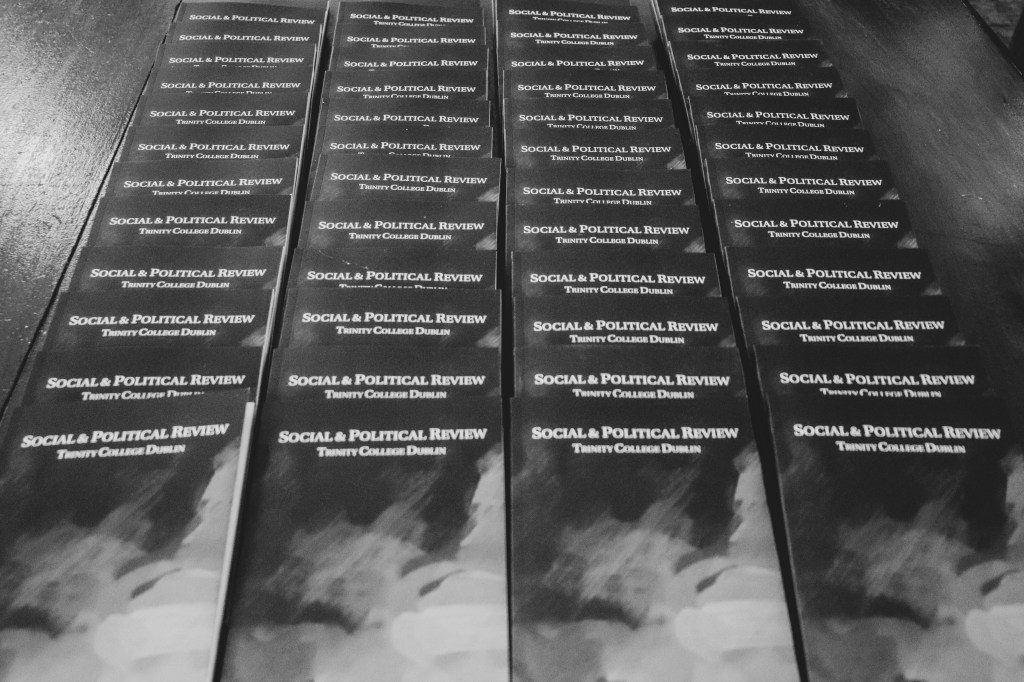
Volume XXXVI of Social & Political Review
Foreword
Dear Reader,
Welcome to volume 36 of the Social and Political Review! Whenever someone asks whether the SPR is an established journal, I tell them it is now in its 36th year; their reaction is a mix of admiration and surprise. I take great pride in that response, as it reflects the journal’s longstanding consistency and credibility. Over the past 36 years, everyone involved has demonstrated unwavering passion and dedication, and I am honoured to be among them.
This volume marks an unprecedented year for the SPR. For the first time in the journal’s history, we introduced a theme ‘Identity, Communities, and Power’, aiming to give the volume a clear direction and coherence. In today’s political context, characterised by the erosion of the liberal international order, multiple and simultaneous conflicts, escalating migration flows, stricter immigration policies, and the marginalisation of the climate crisis, the distribution of power across cultural, religious, linguistic, and socio-economic identities has become especially salient. The prevailing rhetoric of identity politics often obscures deeper power dynamics, portraying certain groups as threats, liabilities, or even as barbaric others. Identities, in a very primordial way, are expected to carry far more explanatory weight than they are capable of. Therefore, the purpose is to interrogate how these identities are instrumentalised to serve the agendas of the political elites. We trust this collection will inspire dialogue and guide future research on these underlying power landscapes.
Contributing to the far-right literature, Theo Puech shows that heightened immigration salience in Ireland local elections reduces voters’ willingness to transfer preferences to ethnic-minority candidates, and Isabel Fellenz finds the AfD leveraged the October 7 Hamas attacks to reinforce Islamophobia while posing as a defender of Jews. On the other hand, Anna Zivkovich explains that the US’ 2025 cuts to development aid leaves large funding gaps for the Global South. On the theme of racial governance: Faye Predergast shows how Mauritius preserves democratic stability by institutionalising racial categories through the Best Loser System, while Elsa Williams traces the Peoples Temple’s rise and tragic collapse, arguing that unmet post-civil-rights racial promises helped the cult attract marginalised followers. There is a strong focus on identity politics: Clara Abreu argues that the FMLM’s civilian-dependent insurgency combined shared identity, organisational incentives and local information networks to limit violence against civilians, and Ava Urquidez demonstrates that growing Protestant competition pushes the Catholic Church in Mexico and Bolivia toward more substantive protection of Indigenous peoples. Marysia Uklanska analyses Andrzej Wajda’s film, Ashes and Diamonds, to reveal how competing wartime rituals prevent the formation of a legitimate post-war Polish polity. I congratulate the authors on their brilliant work; it has been a pleasure to read and an honour to publish.
Publishing an academic journal is a laborious process that depends on the commitment and expertise of many individuals and institutions without whom the production of this volume would not have been possible. Dylan, Catarina, Isabelle J., Amir, Raina, and Prachi A. for their meticulous selection and editing of every submission. Maylea, Ila, and Sofia, whose keen eyes ensured linguistic precision throughout the volume. Isabelle S., for her organised approach to planning and executing events. Isabella, for her dedicated effort in enhancing our online presence and designing this volume. Elisa, for her competent oversight of the operations and successful securing of funding. I also extend my sincere gratitude to the Department of Political Science and Department of Sociology, together with our external partners Trinity Trust, Think-tank for Action and Social Change, and Grehan’s Printers, for their indispensable support and resources.
I have served this journal for the last three years – first as an author, then as an assistant editor, and now as Editor-in-Chief. The review has played a central role in my university experience, and thus it deeply humbles me to write these words. SPR was established to provide the undergraduate students of Trinity an opportunity to meaningfully contribute to the fields of sociology and political science, and it remains committed to showcasing such outstanding scholarship today. I trust that you will discover exactly this in our inaugural themed Volume XXXVI: Identity, Communities and Power.
Prachi Tailor
Editor-in-Chief

